Why Sailcloth Tents Work So Well for Montana Weddings
 By Scott EastmanOwner, Celebrate Event Rentals
· 11 min read
By Scott EastmanOwner, Celebrate Event Rentals
· 11 min read
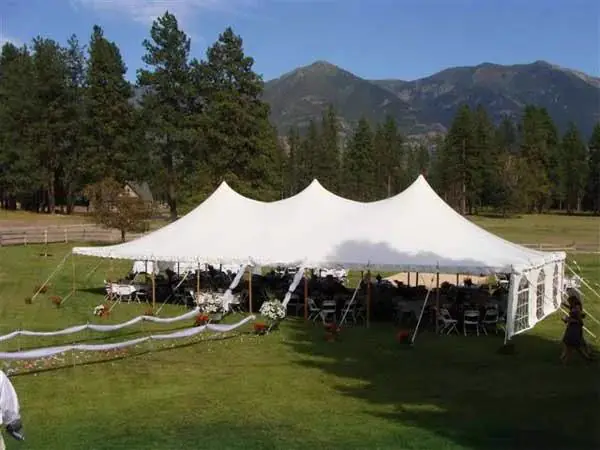
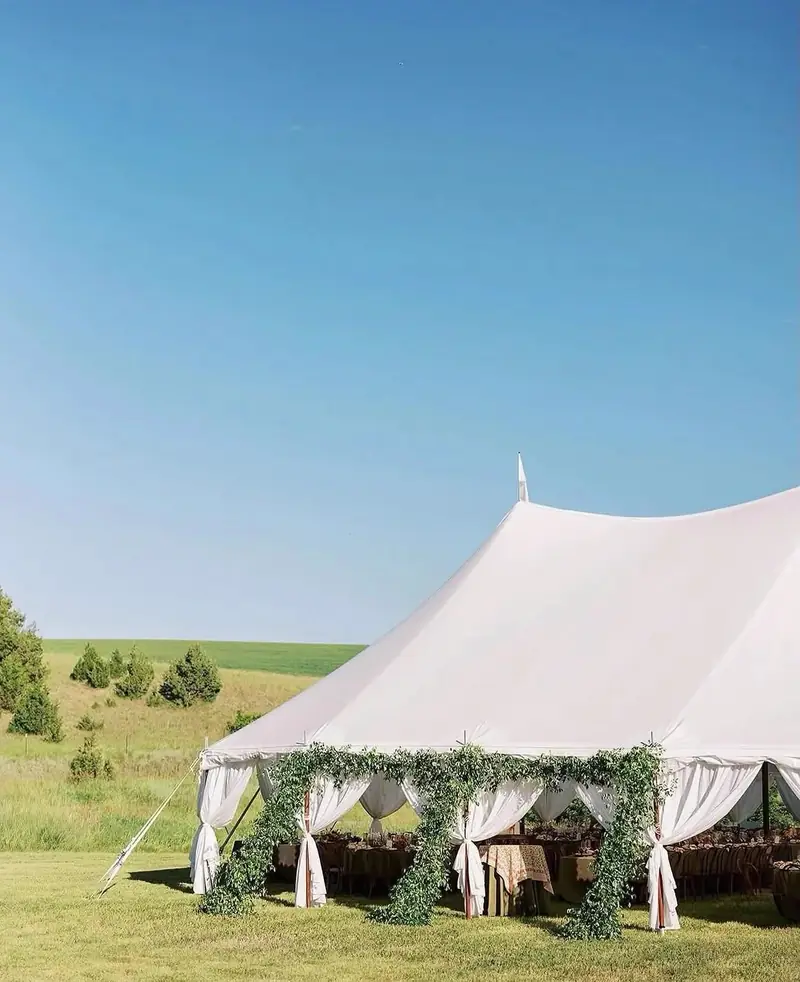
An outdoor Montana wedding almost always begins with the landscape. Couples choose lakefront lawns, ranch properties, open meadows, and mountain-view settings because they want those surroundings woven into the celebration itself, not reduced to a view glimpsed through a ballroom window.
The real challenge is building enough structure for dinner, dancing, and gathering without the reception ever feeling cut off from the property that inspired the wedding in the first place. That balance is precisely why sailcloth tents have become such a distinctive choice for outdoor celebrations.
With translucent fabric, sweeping peaks, and wooden poles, a sailcloth tent defines a reception space while keeping a far lighter presence than many conventional event structures. Daylight filters through the canopy, the architecture becomes part of the design rather than a backdrop to it, and the interior can glide naturally from an afternoon gathering into an evening reception.
The benefits of sailcloth tents for weddings reach well beyond shelter. Their appeal lies in how gracefully they combine structure, natural light, openness, and design character within a single space. Celebrate Event Rentals has served the Flathead Valley since 2009, offering sailcloth tenting alongside furniture and tabletop rentals for celebrations throughout the region.
What Makes a Sailcloth Tent Different?
Before weighing the advantages, it helps to understand what gives a sailcloth tent its unmistakable look. Unlike tents built on rigid framing, sailcloth structures rely on wooden poles and a translucent canopy that create softer peaks and gently curved lines, shaping both its appearance and the feel of standing inside.
A Translucent Sailcloth Canopy
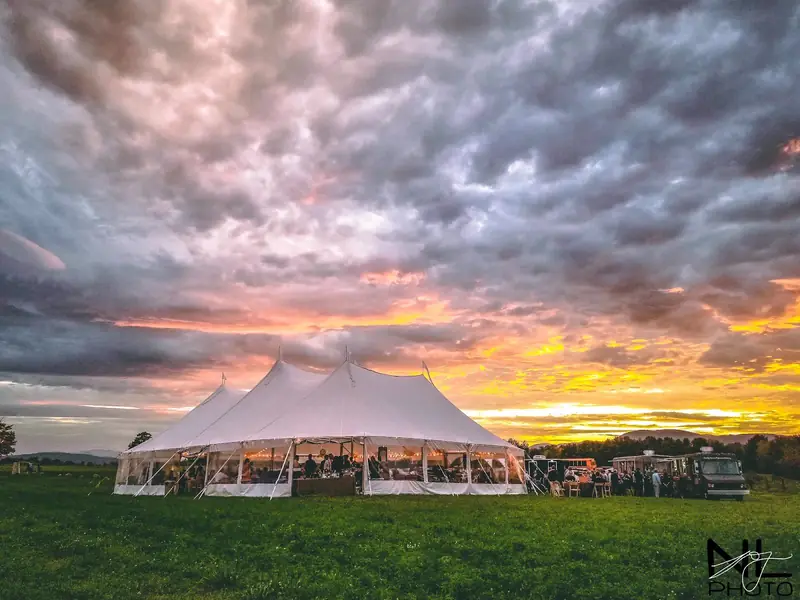
The translucent canopy lets daylight filter into the reception space, keeping the interior bright through the afternoon without feeling fully exposed. As evening lighting takes over, the same fabric takes on a warmer character, letting the tent move naturally from a daylight celebration into an evening reception.
Wooden Poles and Sweeping Peaks
The wooden poles and rounded peaks give sailcloth tents architectural character before any décor arrives, lending softer lines than many conventional structures. The effect is subtle rather than commanding, just enough presence to define the reception while still feeling at home among natural surroundings.
A Structure Intended for Appropriate Open Ground
Sailcloth tents depend on staking, so suitable ground conditions matter early in the planning conversation. Grass and other natural surfaces work well; paved or heavily hardscaped ground does not, so couples should weigh sailcloth's visual appeal alongside the venue's practical realities.
Benefit #1: Sailcloth Lets the Setting Stay Part of the Wedding
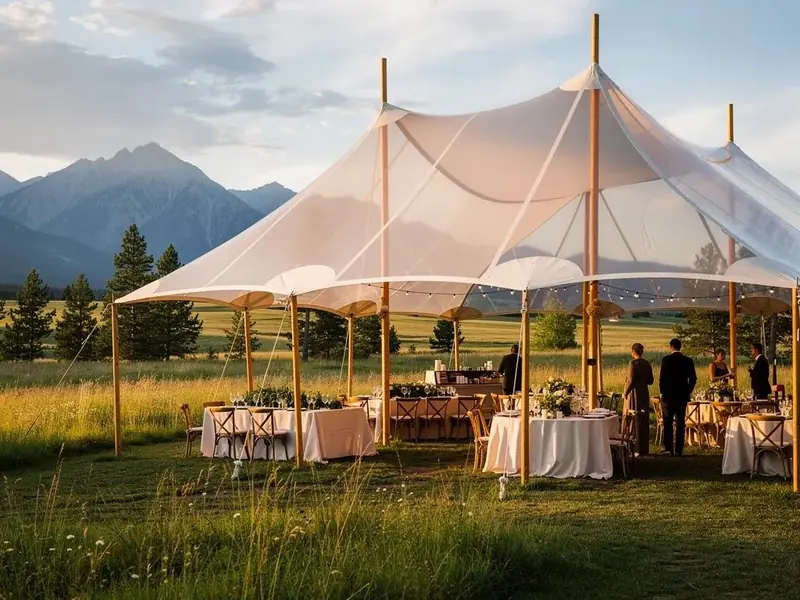
One of the strongest reasons to choose an outdoor Montana venue is the setting itself, so a reception structure should support that experience rather than compete with it. Sailcloth works particularly well when couples want a defined gathering space that still feels connected to the landscape around it.
It Does Not Need to Compete With the Landscape
Mountain views, lakefront lawns, open ranch land, and wooded surroundings already carry a strong visual identity of their own. In those settings, heavy architectural or decorative weight can sometimes work against the very character that drew a couple to the property.
Sailcloth offers a different approach. Its lighter canopy, wooden poles, and curved profile can define a reception space without asking the landscape to disappear behind a fully enclosed environment, which makes the tent useful as both infrastructure and visual framing.
The Reception Can Still Feel Outdoors
A tent creates boundaries, of course, but a sailcloth reception can still hold onto much of the openness couples love about an outdoor wedding. Guests have a clear place to gather for dinner and dancing, yet the setting remains part of the experience throughout, a balance that matters especially for destination weddings, where guests have traveled specifically to experience Montana.
The tent does not need to replace the outdoor environment. It simply gives guests a graceful way to experience it.
Placement Can Highlight Important Views
Where the tent sits on the property matters almost as much as the structure itself. Entrance direction, table orientation, bar placement, and the location of the dance floor all shape what guests see while they are inside. A thoughtfully positioned tent preserves the views that matter rather than blocking them, which is why placement belongs in the design conversation and not simply the installation plan.
Benefit #2: Natural Light Changes the Feel of the Reception
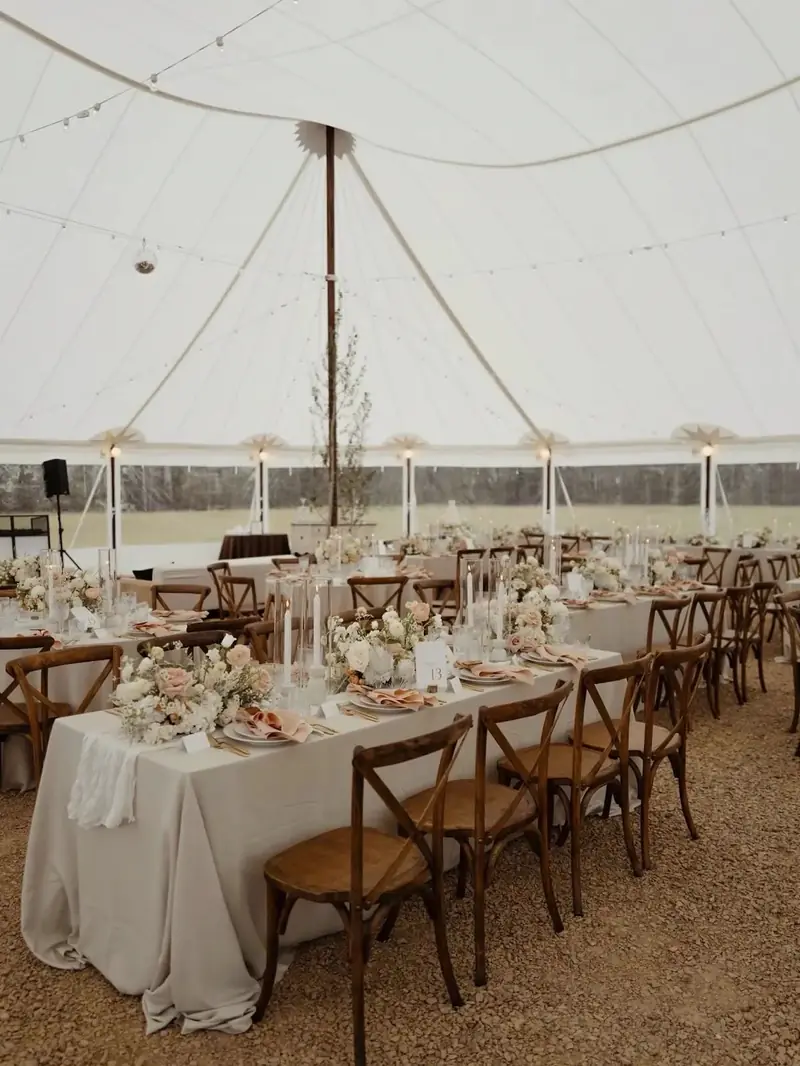
Light shapes how a wedding space feels more than almost anything else, and sailcloth interacts with it beautifully throughout the day. The translucent canopy softens the transition between an outdoor property and a covered reception, letting the same structure change character as the celebration unfolds.
Soft Daylight During Afternoon Events
During the daytime, filtered natural light keeps the tent feeling bright without giving guests the sense that they have stepped into a fully enclosed room. That quality is especially valuable for weddings where the ceremony, cocktail hour, and early reception all take place while daylight still lingers, since the space stays connected to the hour and the surroundings.
A Natural Transition Into Evening
As the sun lowers, lighting inside the tent takes on greater importance. The same translucent canopy that plays with daylight can turn warmer once evening illumination becomes the dominant source, and the shift can happen gradually as the wedding moves from cocktail hour into dinner and dancing.
Light Can Give Other Design Elements Room to Work
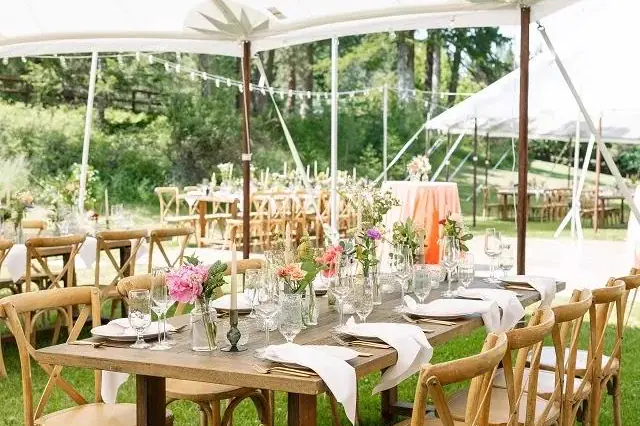
Because the canopy itself contributes softness and brightness, the rest of the reception design does not have to carry the entire visual weight. Florals, linens, chairs, glassware, candles, and other tabletop details can stand out beautifully against a relatively light architectural backdrop, a foundation that lets the landscape and chosen design details remain the focus.
Benefit #3: The Tent Becomes Part of the Wedding Design
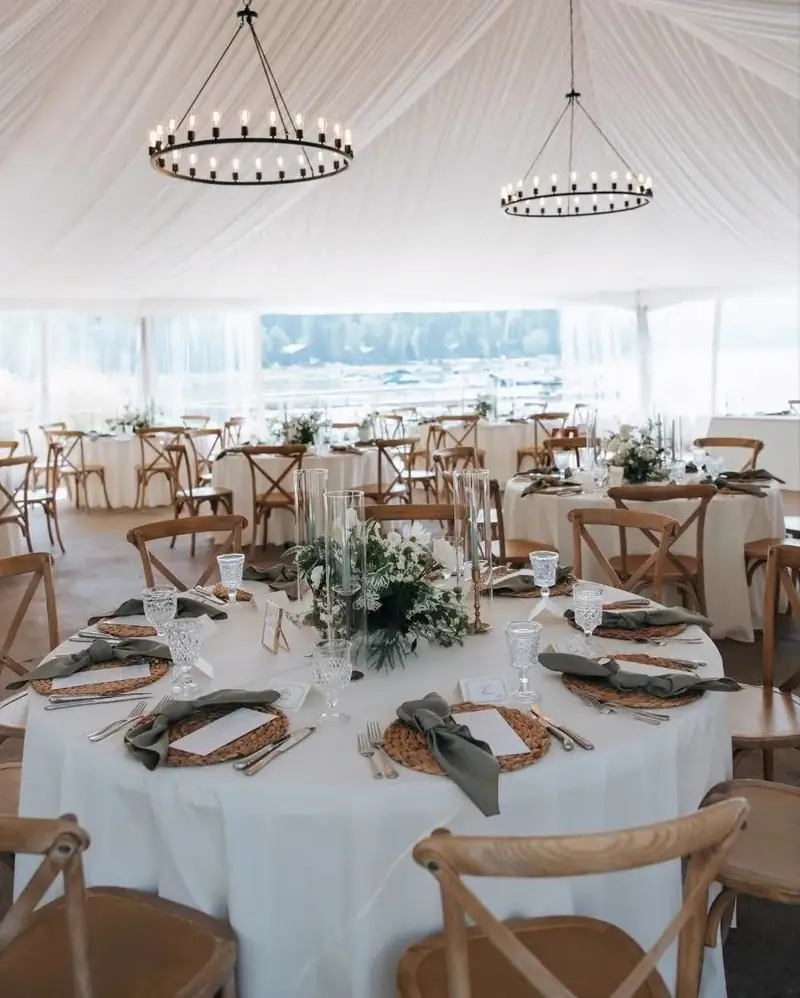
A sailcloth tent is never simply something placed over a reception in case shelter is needed. Its shape and materials contribute directly to the atmosphere, which is why tent selection belongs in the design conversation rather than a decision made apart from it.
The Structure Has Its Own Visual Character
The combination of wooden poles, sweeping peaks, and translucent material gives sailcloth a recognizable identity. From inside, the poles form natural vertical lines within the room. From outside, the peaks shape the silhouette of the event space. These features mean the tent never needs to be hidden beneath layers of decoration before it feels intentional; it already does.
Sailcloth Can Support Different Wedding Directions
Sailcloth is often associated with romantic outdoor weddings, but its appeal is not confined to one aesthetic. Depending on the furniture, linens, lighting, florals, and property, it can suit:
- Refined destination weddings
- Relaxed outdoor celebrations
- Garden-inspired receptions
- Ranch settings
- Minimal, landscape-led designs
- More layered romantic environments
The tent lays the foundation, while the rentals and styling inside give the celebration its specific character.
More Decoration Is Not Always Necessary
Because the structure already carries visual interest on its own, couples can be selective about what they add. A dramatic floral installation may suit one wedding, while another may lean more on lighting, tabletop details, or the surrounding views. Rather than dressing every surface, couples can choose where to place emphasis and let the architecture of the tent stand on its own elsewhere.
Benefit #4: Sailcloth Defines a Reception Without Making It Feel Fully Enclosed
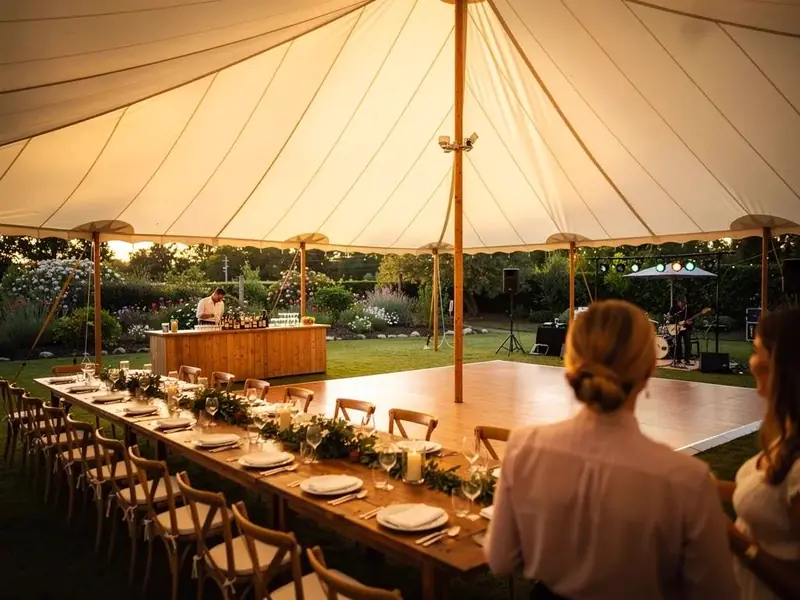
Outdoor weddings often need more structure than couples first expect. Dinner needs a defined area. The bar needs a logical home. The dance floor, entertainment, and guest seating all need to relate to one another, and a tent gives these pieces a framework to live within.
It Creates a Clear Gathering Place
Even on a large property, guests benefit from knowing exactly where the celebration is happening. A tent establishes that central point, so tables, bars, entertainment, and other rentals can be arranged around a recognizable room rather than scattered across an open lawn. It helps an expansive property feel intentional rather than undefined.
The Property Can Remain Part of the Experience
Creating a room does not mean recreating the feeling of an indoor ballroom. The visual qualities of sailcloth let the structure function as a reception space while keeping a lighter relationship with the setting around it, a balance that matters most for couples who chose an outdoor venue specifically so guests could experience Montana's scenery.
One Space Can Support Several Parts of the Evening
With a carefully developed floor plan, the tent can accommodate multiple reception functions at once. Dining may occupy one area while dancing, entertainment, and bar service unfold in others, and lounge furniture or smaller gathering zones can be tucked in wherever the footprint allows.
The real benefit is not simply one large covered area. It is a defined framework within which every part of the reception can relate gracefully to the next.
Benefit #5: Sailcloth Works Naturally With Layered Wedding Lighting
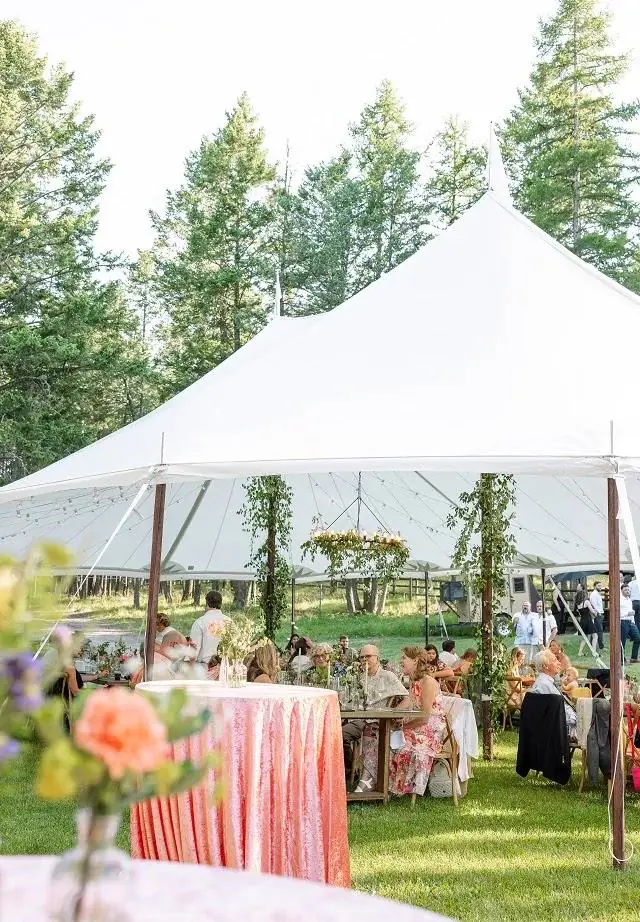
Lighting matters enormously in a tented wedding, since the reception space can look strikingly different from afternoon to evening. Sailcloth offers a beautiful foundation for that transition.
Begin With Natural Light
During daylight hours, the canopy itself helps shape the interior atmosphere, so couples rarely need a heavily illuminated setup early in the day; natural light is already doing much of the work. As evening approaches, artificial lighting can gradually take over.
Add Lighting as the Celebration Changes
Depending on the event design, evening illumination may include overhead lighting, tabletop candlelight, and accent lighting around key areas such as the bar or dance floor. The most cohesive approach is to plan those layers around how the reception will actually be used.
Dining calls for a different mood than dancing. Entrances and walkways serve a different purpose than decorative focal points.
Integrate Lighting With the Architecture
The poles and peaks of a sailcloth tent offer an architectural framework that lighting can respond to. Rather than treating lighting as an unrelated final touch, couples and planners can consider how illumination will interact with the structure from the very beginning, letting the evening version of the reception feel like a natural evolution of the daytime space.
Benefit #6: Sailcloth Creates a Foundation for the Rest of the Rentals
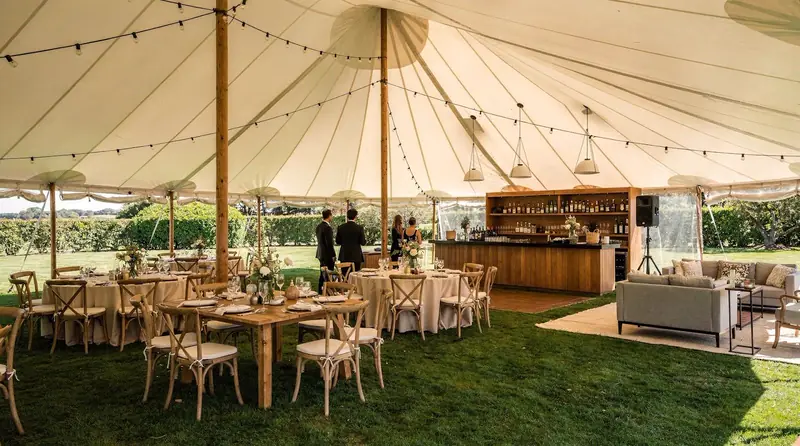
A tent is only one piece of a reception, yet it shapes nearly everything placed beneath it. Once the structure and floor plan are set, furniture, lighting, bars, and tabletop pieces can be chosen within a clear visual framework.
Tables and Chairs Establish the Interior Layout
Furniture gives the tent its first layer of organization. Table configuration determines where guests gather for dinner, while chairs set the level of formality and shape how the interior reads visually. Rather than choosing those pieces apart from the tent, couples can consider how materials and silhouettes work within the structure as a whole.
Linens and Tabletop Add the Next Layer
Linens, dishware, glassware, and flatware then bring texture, color, and detail closer to the guest experience. These pieces never need to compete with the architecture; instead, they reinforce the atmosphere already established by the tent, the furniture, and the surrounding property.
Bars, Dance Floors, and Lounge Furniture Complete the Room
Functional rentals contribute to the design in their own right. A bar can become a visual anchor as much as a service point. A dance floor establishes the center of evening activity. Lounge furniture creates smaller, more intimate conversational areas within the larger reception.
A useful planning sequence is:
Sailcloth Tent, Floor Plan, Furniture, Lighting, Tabletop, Accent Pieces
Building from the large decisions down to the smaller ones helps the finished reception feel cohesive rather than assembled piece by piece.
When Does a Sailcloth Tent Make the Most Sense?
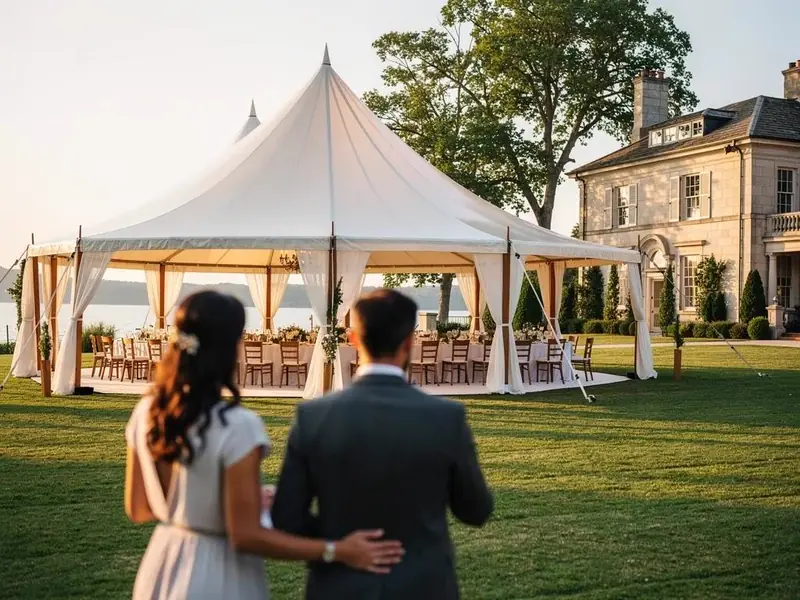
Sailcloth offers real advantages, but it is not automatically the right structure for every property or wedding. The strongest decision weighs the venue, the event format, and the design priorities together.
When the Venue Has Suitable Open Ground
Because sailcloth installations depend on proper anchoring, the property needs to support the structure. Open lawns and other suitable ground conditions often make sailcloth a natural fit, while heavily paved or constrained settings may call for another approach. Sailcloth simply does not work universally across every property.
When the Setting Is Important to the Wedding
Sailcloth is especially compelling when couples want the outdoor environment to stay visually present. If the landscape is part of why the venue was chosen in the first place, a lighter structure helps organize the celebration without letting the surroundings fade into the background.
When the Tent Is Intended to Contribute to the Design
Some couples primarily need functional covered space. Others want the structure itself to be part of the wedding's aesthetic. Sailcloth shines in the second case, since its peaks, poles, and translucent canopy already carry visual character before any additional styling arrives.
Sailcloth Tent vs. Other Tent Styles: What Actually Changes?
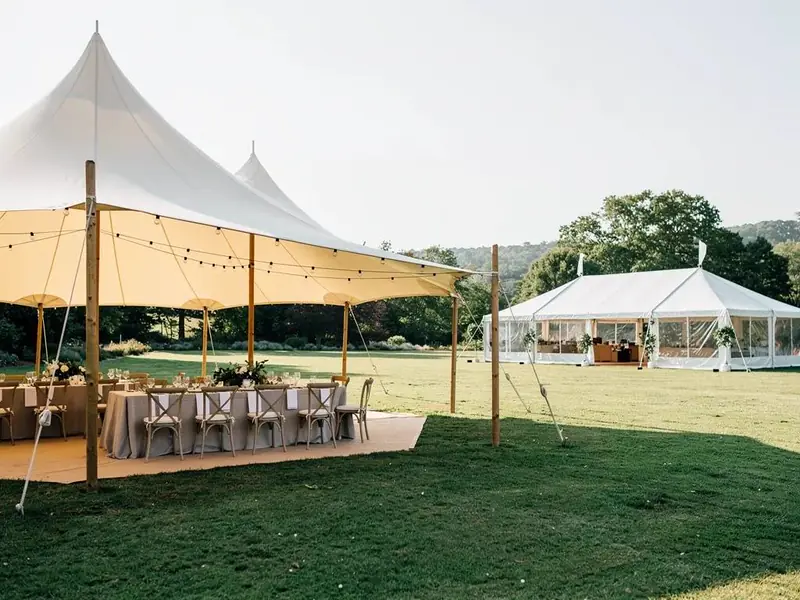
Different tent structures create different experiences. Sailcloth should be chosen because its qualities suit the property and the wedding, never because one style is universally superior.
| Consideration | Sailcloth Tent | Other Tent Structures |
|---|---|---|
| Visual character | Soft peaks, wooden poles, translucent canopy | Varies by structure |
| Daylight | Filters natural light through the canopy | Depends on roof material |
| Ground requirements | Typically relies on staking | Installation method varies |
| Design role | Tent itself contributes strongly to the aesthetic | Depends on tent type |
| Primary reason to consider it | Atmosphere, openness, and architectural character | Depends on site and functional requirements |
There Is No Universal Best Tent
The right structure depends on several factors working together:
- Venue
- Ground conditions
- Guest count
- Floor plan
- Weather strategy
- Event schedule
- Design preference
Sailcloth may be a beautiful fit when its particular qualities meet those needs. Another structure may make more sense when a property's conditions or an event's requirements point elsewhere.
Questions to Ask Before Choosing Sailcloth
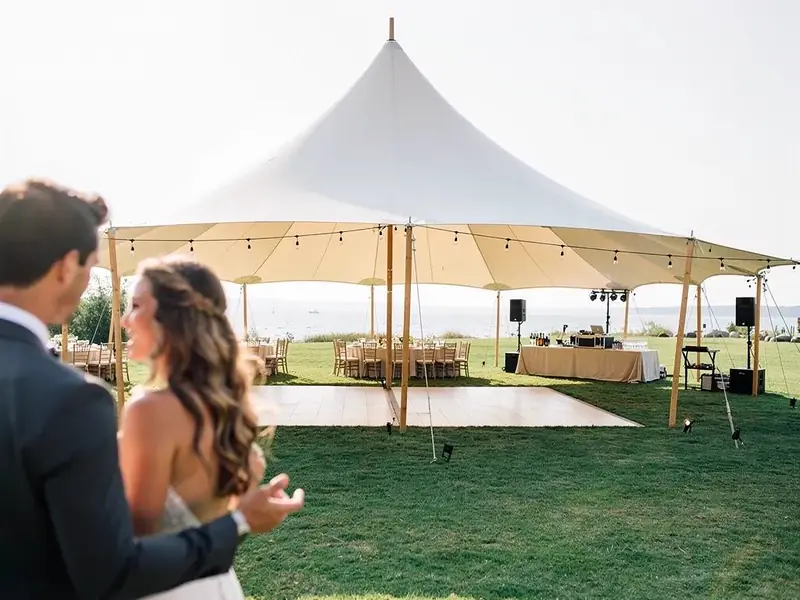
Before committing to a sailcloth structure, couples should make sure the tent fits both the design and the practical needs of the wedding.
Ask:
- Does the venue have appropriate space and ground conditions?
- How many guests need to fit beneath the tent?
- What dining configuration is planned?
- Will the dance floor be inside?
- Will the bar be inside or elsewhere on the property?
- Is a DJ or live band part of the reception?
- What lighting will be needed after sunset?
- Are sidewalls or climate equipment relevant?
- What other furniture or service areas need to fit beneath the structure?
- What setup access does the venue allow?
- When can installation begin?
- When does the structure need to be removed?
These questions help confirm the tent works for the whole celebration, not only for the aesthetic couples fall in love with first.
Why Sailcloth Feels at Home in a Montana Wedding
The strongest case for a sailcloth tent is not any single feature. It is the way several qualities come together.
The translucent canopy plays with natural light throughout the day. Wooden poles and sweeping peaks give the structure genuine architectural character. The tent creates a defined gathering place while still letting an outdoor setting remain part of the celebration, and furniture, lighting, tabletop, and accent pieces can then build on that foundation without ever overwhelming it. For a Montana wedding, those qualities matter most when the landscape itself is central to the experience.
Sailcloth works beautifully when couples want light, openness, architectural character, design flexibility, and a strong connection to the setting within the same reception environment.
Celebrate Event Rentals has served the Flathead Valley since 2009 and provides sailcloth tents alongside tables, seating, linens, and tabletop rentals. For couples considering a tented Montana wedding, the most useful first question is not whether sailcloth is the most beautiful option in isolation, but whether its specific qualities complement the venue, the guest experience, and the celebration they are building.