Choosing Sailcloth Tent Style for an Outdoor Montana Wedding
 By Scott EastmanOwner, Celebrate Event Rentals
· 13 min read
By Scott EastmanOwner, Celebrate Event Rentals
· 13 min read
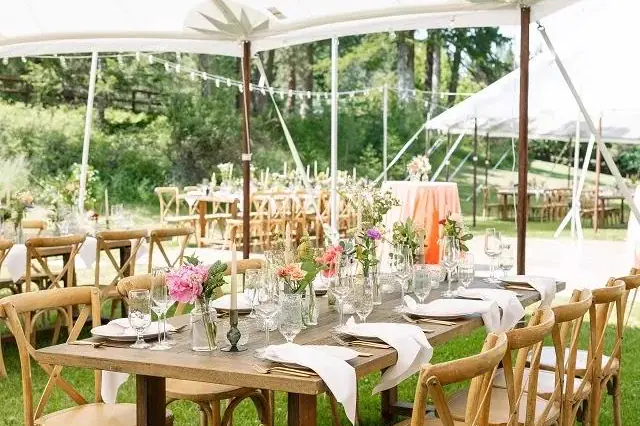
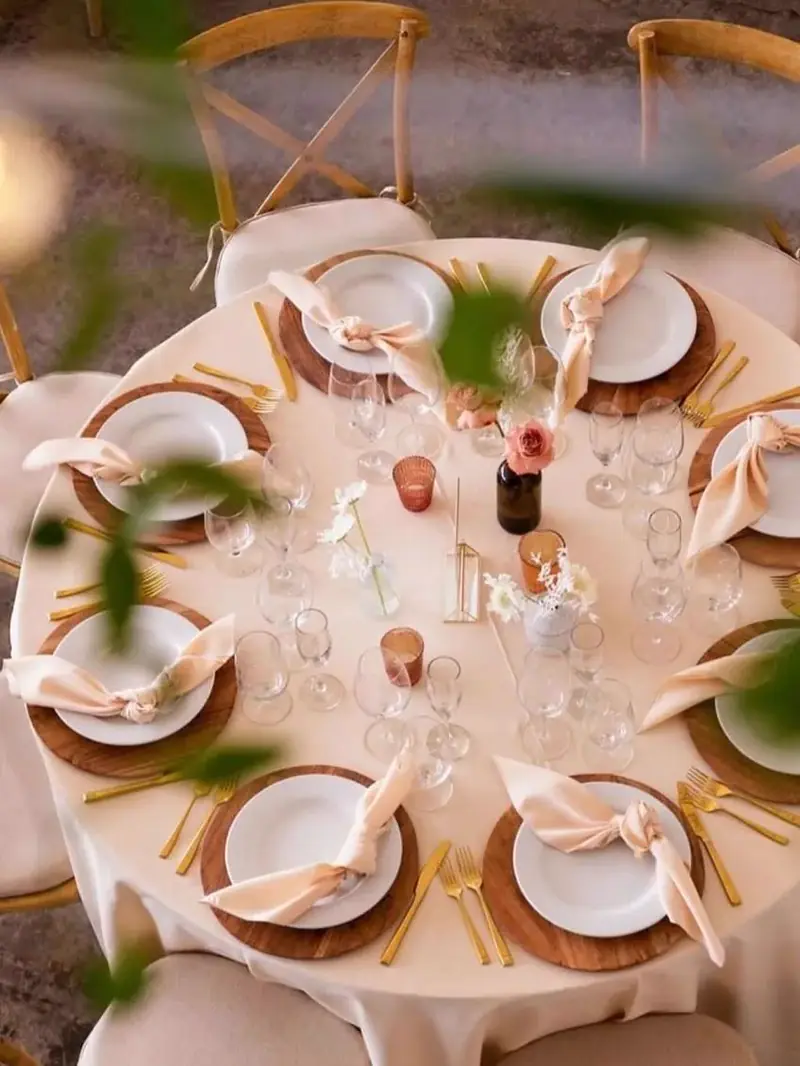
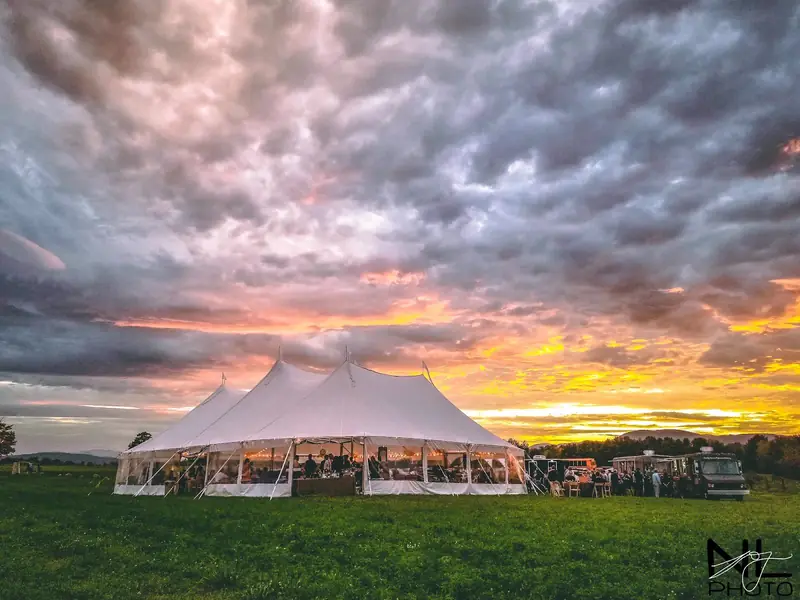
Choosing a sailcloth tent for an outdoor wedding is not simply a matter of selecting a structure and deciding where it will sit. Once couples know they are drawn to the peaked profile and lighter architectural character of sailcloth, another set of decisions begins: how open the reception should feel, which views should remain visible, where dinner and dancing should take place, and how much the tent should define the atmosphere of the celebration.
Those choices are especially important for outdoor weddings in Montana, where the property itself is often one of the strongest elements of the event. A tent can frame the surrounding setting, create a more defined reception room, or do something between the two. The same general sailcloth structure can therefore feel remarkably different depending on how it is oriented, enclosed, furnished, and organized.
For couples comparing sailcloth tent styles for outdoor events, it is useful to think less about choosing from a list of named styles and more about deciding how the structure should function within the wedding. The right approach should support the venue, guest experience, reception layout, and overall atmosphere without making the tent the only thing guests notice.
What Does “Sailcloth Tent Style” Actually Mean?
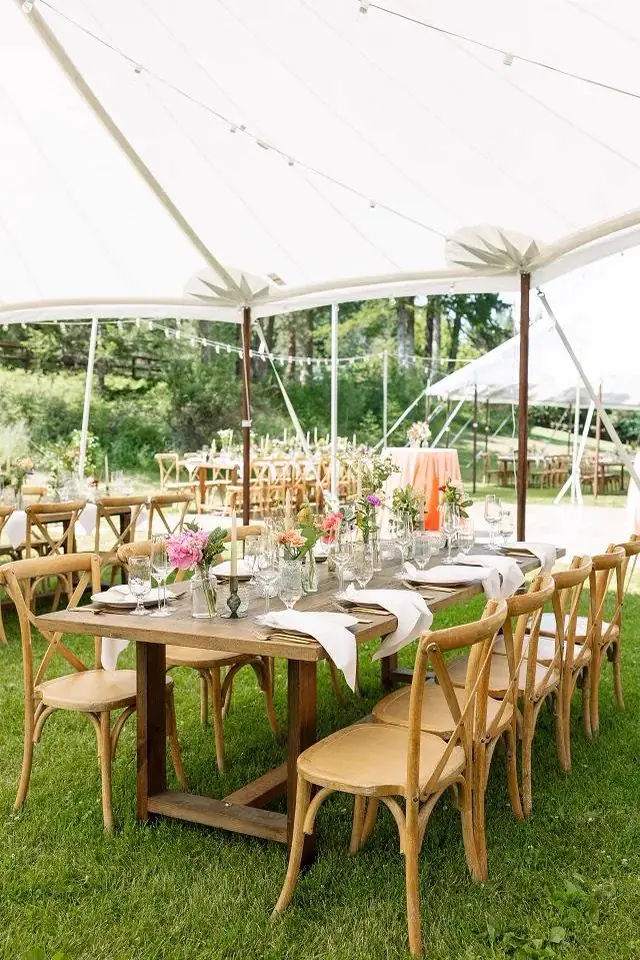
Sailcloth tents share recognizable architectural features, including a peaked canopy, wooden poles, and translucent fabric. Those characteristics give the structure its identity, but they do not determine exactly how every sailcloth wedding will look.
The final style is shaped just as much by how the tent is configured within the venue.
The Tent Profile Creates the Starting Point
The peaked silhouette and visible pole structure establish the basic architecture of the space. Couples do not necessarily need to add extensive decoration to make those features noticeable; the tent already has its own visual character.
From there, the goal is to determine how strongly that architecture should influence the rest of the wedding. Some couples may want the structure to remain prominent, while others may prefer it to function quietly around the dining and reception design.
The Degree of Enclosure Changes the Experience
One of the most important decisions is how open or enclosed the tent should feel.
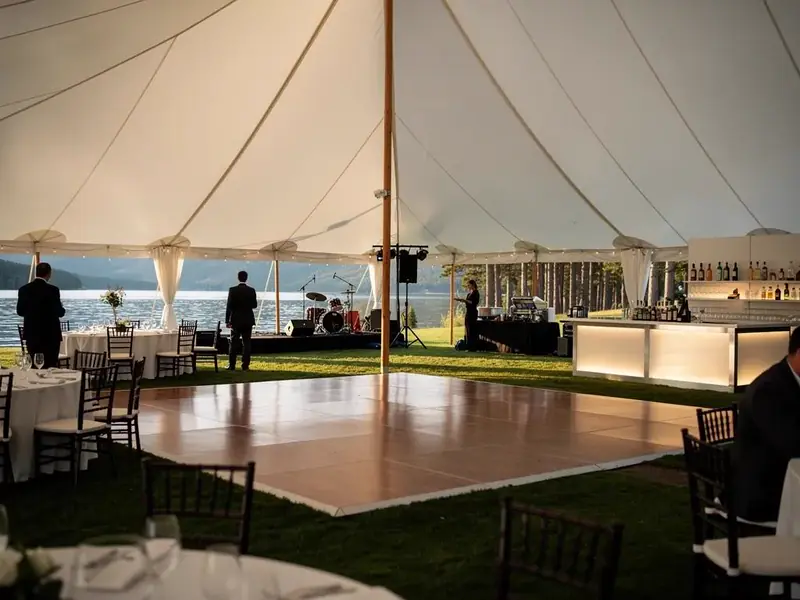
A reception with largely open sides stays closely connected to the surrounding property. A partially enclosed tent creates more visual definition while preserving selected views. A more enclosed configuration shifts attention inward toward dining, lighting, florals, and entertainment.
None of these approaches is inherently better. They simply create different experiences.
The Interior Arrangement Changes the Style Too
A sailcloth tent centered around a dance floor feels very different from one dominated by long dining tables. A reception with multiple lounge areas creates another effect, while a tent designed primarily around dinner may feel more intimate and structured.
That means tent style cannot be separated from the floor plan. The structure provides the framework, but the activities happening beneath it ultimately determine how guests experience the space.
An Open Sailcloth Setup Works Best When the Setting Should Stay Visible
For some Montana weddings, the scenery is one of the main reasons the venue was chosen. In that case, a more open sailcloth configuration can allow the landscape to remain part of the reception rather than becoming something guests leave behind after cocktail hour.
Keep the Landscape Part of the Reception
An open-sided setup allows guests to continue seeing the surrounding property while they dine, gather, and move through the evening.
This can be particularly effective on venues where one side of the property has a strong lake, mountain, meadow, or wooded view. Instead of creating a visual boundary around the reception, the tent defines the gathering space while keeping the setting present.
The result can feel structured without feeling fully enclosed.
Use the Tent as a Frame Rather Than a Room
An open configuration works well when the tent is intended to frame the celebration rather than create a complete interior environment.
Tables, chairs, bars, and lighting still establish a clear reception area, but the edges remain visually connected to the property. The architecture of the tent provides definition overhead while the landscape provides much of the surrounding character.
For couples who want an outdoor wedding to continue feeling genuinely outdoors through dinner, this can be an appealing balance.
Consider How Guests Move Between the Tent and Property
An open approach can also support a wedding that uses several nearby areas.
Guests may move between the tent, lawn, cocktail space, lounge area, or another outdoor gathering point during the reception. The tent should therefore be oriented so those transitions feel natural rather than forcing guests through one narrow entrance every time they move between spaces.
This is less about decoration and more about how the property functions over the course of the evening.
A Partially Enclosed Sailcloth Setup Creates More Definition
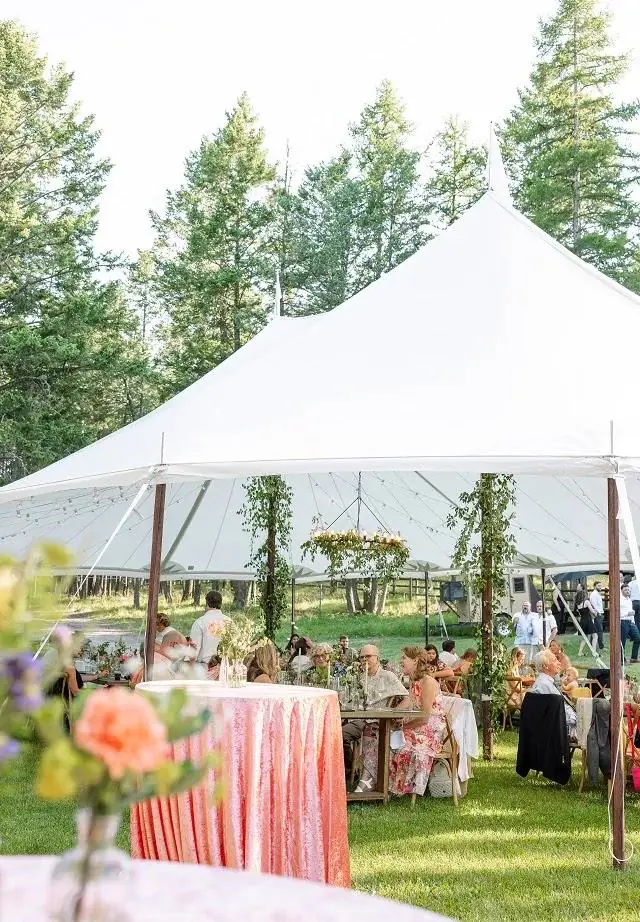
Not every reception needs to be completely open or fully enclosed. A partially enclosed setup can offer a more balanced approach by treating different sides of the tent according to their role.
This is often one of the most useful ways to adapt sailcloth to a specific property.
Preserve Important Views Selectively
If one side of the venue has the most important view, that side can become the visual priority.
Other sides of the tent may not need the same openness. The reception can preserve the strongest sightline while using more enclosure around less scenic or more functional parts of the property.
This creates a more intentional relationship between the tent and its surroundings.
Use Enclosure Around Functional Areas
Some parts of a reception naturally benefit from greater visual separation.
Catering areas, equipment, service routes, or entertainment setups may not need to remain fully exposed. More enclosed portions of the tent can help give these zones a clearer background while allowing other sides to stay visually open.
The result is a reception that feels organized without treating every edge of the tent exactly the same way.
Let the Venue Determine Where Enclosure Makes Sense
A symmetrical tent does not require a symmetrical treatment.
The best configuration often responds to what exists outside each side. One direction may overlook open scenery, another may face a building, and another may contain catering or vendor activity.
Thinking about each side individually produces a more site-specific result than choosing one enclosure approach and applying it around the entire structure.
A More Enclosed Tent Can Create a Defined Reception Room
Some couples want the reception to feel more like a complete interior environment, even when the wedding itself takes place outdoors.
A more enclosed sailcloth configuration can create that sense of definition while retaining the architecture of the tent overhead.
When an Interior-Focused Reception Makes Sense
A more enclosed setup may suit a wedding where dinner, entertainment, and evening atmosphere are intended to become the primary experience once guests enter the reception.
Instead of constantly drawing attention outward, the room can place more emphasis on the tables, dance floor, florals, lighting, and conversations happening inside.
This can create a stronger transition between an outdoor ceremony or cocktail hour and the reception that follows.
Enclosure Changes the Visual Character
As the tent becomes more enclosed, the interior design carries greater responsibility.
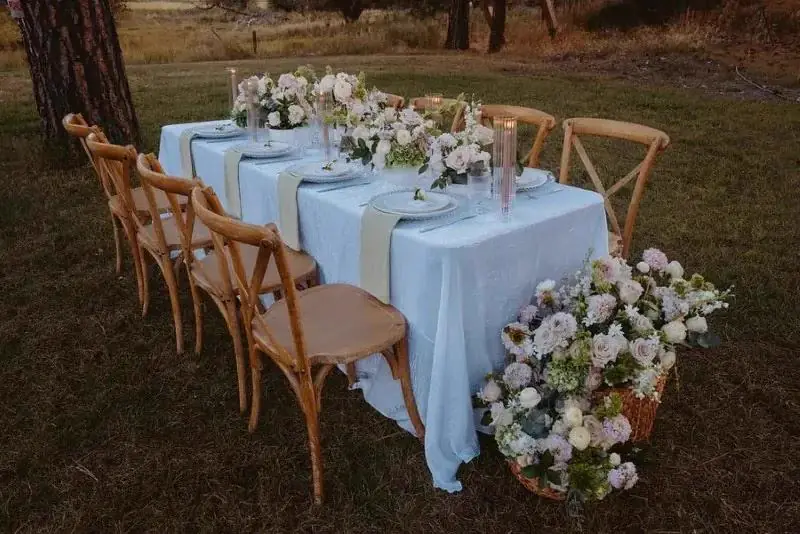
Furniture arrangements become more noticeable. Lighting has a stronger influence on the atmosphere. Tabletop details and florals contribute more prominently because the surrounding landscape is no longer doing as much visual work.
Couples considering this direction should think about the complete room rather than viewing the tent only as shelter around the reception.
Keep the Setting Present Where It Matters
A more enclosed reception does not require eliminating every visual connection to the property.
Where the tent configuration and venue allow, selected openings or clear sections can preserve important views. The objective is not necessarily maximum enclosure but a more intentional balance between the interior and exterior.
Choose the Tent Approach Around the Wedding’s Main Priority
The easiest way to narrow the options is to decide what should matter most once guests enter the reception.
| Wedding Priority | Sailcloth Approach to Consider |
|---|---|
| Keeping mountain or lake views prominent | More open configuration with sightlines prioritized |
| Creating an intimate dinner atmosphere | More defined or partially enclosed reception |
| Making dancing the focal point | Interior layout centered around the dance floor and entertainment |
| Creating a relaxed outdoor flow | Open edges with easy movement between the tent and property |
| Building a more formal evening reception | Greater enclosure with stronger emphasis on the interior design |
This does not mean a wedding must fit neatly into one category. Many receptions combine several priorities. The table is simply a useful way to identify which choices deserve the most attention.
Let the Venue Shape the Tent Style
A sailcloth setup should feel as though it belongs on the property rather than having been placed there without reference to the surroundings.
Orientation, entrance direction, usable footprint, and nearby views can all influence the final configuration.
Open Lawns Offer Different Possibilities Than Constrained Sites
A wide, open property may allow more flexibility in how the tent is oriented and how guests move around it.
A more constrained venue may require the reception to work within a specific footprint. In that case, entrance placement, dining layout, and enclosure decisions become even more important.
The point is not that one site is better than another. It is the site that should influence how the tent is planned.
Identify the Most Important View
Before determining the orientation, couples should identify what they most want guests to see from the reception.
That may be a lake, a mountain line, a landscaped area, a ceremony site, or another part of the property.
The answer can influence how tables are positioned, which side remains visually open, and where guests first enter the structure.
Consider How Guests Approach the Tent
The entrance creates the first impression of the reception.
Guests might arrive looking directly toward a dining arrangement, dance floor, floral feature, bar, or a view beyond the opposite side of the tent. Each choice establishes a different focal point.
Rather than treating the entrance as whatever opening is most convenient, couples can consider what they want guests to experience in the first few moments inside.
Choose a Layout Style That Matches the Reception
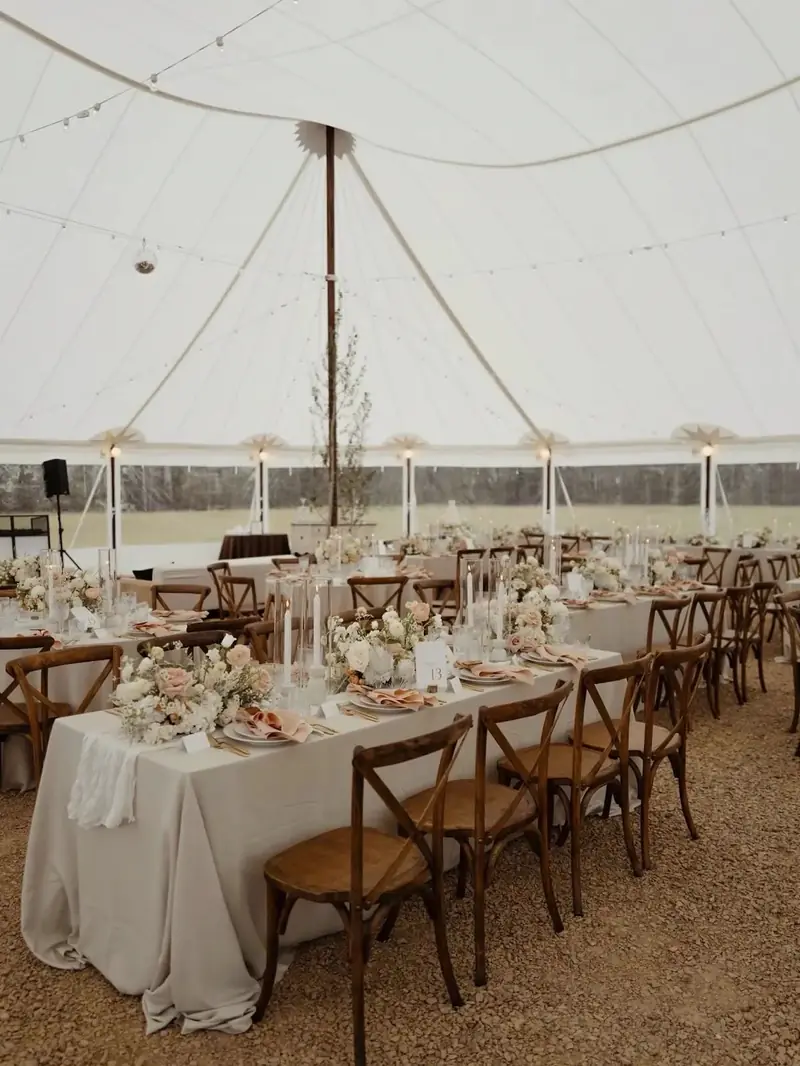
The interior layout plays a major role in defining the style of the tent. Once the degree of enclosure and orientation are established, the next question is what should visually anchor the reception.
A Dining-Led Layout
For weddings where dinner is a major part of the experience, the table arrangement can become the central interior feature.
This might mean emphasizing long visual lines, creating a strong head-table focal point, or arranging dining so guests remain visually connected to one another.
The tent then serves primarily as a setting for the dinner experience, with dancing and other activities positioned around it.
A Dance-Floor-Led Layout
Other weddings may place entertainment at the center of the evening. In that case, the dance floor can become the primary gathering point, with tables and lounge areas arranged so guests remain connected to the activity even when they are seated.
This approach often works best when the entertainment footprint is considered early rather than fitted into whatever space remains after dinner seating is established.
A Mixed-Zone Layout
Many receptions need to balance several activities within the same tent. Dining, dancing, bar service, and lounge seating may all have their own areas without requiring physical walls between them. Furniture placement and lighting can create enough distinction for each zone to feel intentional.
The goal is to avoid making the tent feel like one undifferentiated room.
Formal or Relaxed? Sailcloth Can Support Both
Sailcloth is often associated with romantic or rustic weddings, but the structure itself does not dictate one design style. The final atmosphere depends far more on how the tent is configured and what is placed beneath it.
A More Relaxed Sailcloth Reception
A relaxed wedding may emphasize open sides, simpler furniture, and a stronger visual connection to the property.
The tent can remain relatively understated, allowing the surrounding setting and natural materials to carry much of the design.
Decorative elements may be selective rather than highly layered, which can give the reception a lighter and more informal character.
A More Refined Sailcloth Reception
A more formal or polished design might use a more structured table arrangement, stronger interior lighting, layered linens, and more deliberate enclosure.
The architecture of the tent still remains visible, but the reception feels more like a complete room rather than a lightly furnished outdoor shelter.
This approach does not require excessive decoration. Refinement can come from consistency, proportion, and carefully chosen materials rather than from adding more elements.
The Tent Does Not Determine the Entire Aesthetic
It is useful to separate the architecture of the tent from the overall wedding style.
Furniture, florals, linens, lighting, tabletop, and the venue itself all contribute to whether the reception feels romantic, formal, contemporary, relaxed, or somewhere in between.
Sailcloth provides the architectural foundation. The rest of the design determines how that foundation is interpreted.
How Much Should the Sailcloth Tent Influence the Rest of the Design?
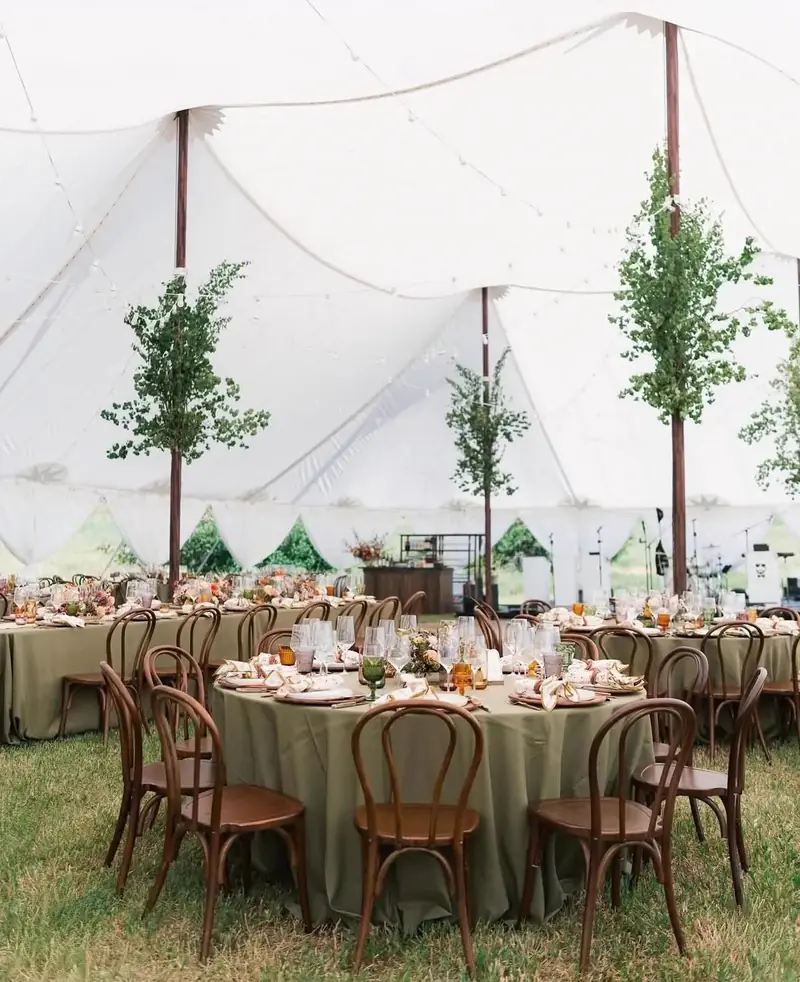
Because sailcloth already has visible peaks, poles, and fabric movement, couples do not need to treat every part of the structure as something that must be decorated.
A more selective approach often allows the tent to feel more natural within the wedding.
Let the Tent Provide the Architectural Base
Wooden poles and peaks already contribute structure to the room. Rather than covering those elements completely, the design can work around them. Tables, floral placements, and lighting can respond to the architecture without trying to transform it into something else.
Decide Which Element Should Lead
A reception becomes clearer visually when one or two elements receive the most emphasis.
The landscape may be the main feature. At another wedding, it may be the dining arrangement, lighting, florals, or tent architecture.
If everything is treated as the focal point, the room can quickly become visually crowded.
Avoid Overstyling
Sailcloth does not require decoration on every pole or installation at every peak.
Leaving some of the structure visible can help the reception retain the lighter architectural quality that drew the couple to sailcloth in the first place.
Decorative additions should support the overall wedding rather than exist simply because there is space available for them.
Sailcloth vs. Another Tent Structure: When Should You Reconsider?
Sailcloth can be a strong option for many outdoor weddings, but choosing it should still be based on the actual event and property.
There are situations where another structure may better support the wedding being planned.
When the Site Does Not Support the Desired Configuration
Every tent has installation requirements, and not every property supports every structure in the same way.
If the desired sailcloth arrangement does not work comfortably within the available site, another tent format may provide a more practical solution.
The decision should be based on the actual venue rather than forcing the property to accommodate a preferred look.
When the Desired Interior Is Fundamentally Different
Some couples want an architectural environment that differs significantly from what sailcloth naturally provides.
If the reception vision depends on a different roofline, interior framework, or degree of structural flexibility, another tent type may make more sense.
Choose Based on the Wedding, Not the Trend
Sailcloth photographs well and appears frequently in outdoor wedding inspiration, but popularity alone is not a reason to choose it.
The tent should suit the venue, layout, atmosphere, and guest experience. If another structure serves those priorities better, that is the stronger choice.
Frequently Asked Questions
Are there different styles of sailcloth wedding tents?
Sailcloth tents share several common architectural characteristics, but the finished experience can vary significantly depending on the structure's size, orientation, sidewall configuration, entrance placement, interior layout, and styling. Couples can therefore create very different wedding environments within the broader sailcloth format.
Should a sailcloth wedding tent have open sides or sidewalls?
There is no universal answer. A more open configuration may work well when scenery and movement between indoor and outdoor spaces are priorities. Partial or greater enclosure may make sense when the reception needs more visual definition. The venue and overall wedding plan should guide the decision.
Can a sailcloth tent work for a formal wedding?
Yes. Sailcloth does not determine the level of formality by itself. Table arrangements, furniture, lighting, florals, linens, and tabletop details all influence whether the reception feels more relaxed or refined.
Does the dance floor need to be centered under a sailcloth tent?
No. Dance-floor placement should respond to the entire reception layout, including the dining arrangement, entertainment setup, bar location, entrances, and guest circulation. A centered dance floor may work for one wedding, while another arrangement may function better elsewhere.
How do couples choose the right sailcloth setup for a Flathead Valley venue?
Begin with the property's usable footprint, strongest views, guest movement, and planned reception activities. From there, decide how open or enclosed the tent should feel and which part of the reception should become the main interior focal point.
The Right Sailcloth Style Should Fit the Wedding, Not Define It
Choosing a sailcloth tent style for an outdoor Montana wedding is ultimately about deciding how the structure should interact with the celebration around it.
An open configuration can keep the property visually present. Partial enclosure can preserve selected views while giving functional areas more definition. A more enclosed approach can shift attention toward dinner, lighting, florals, and entertainment. Inside the tent, the arrangement can revolve around dining, dancing, or several distinct gathering areas depending on how the reception is meant to unfold.
The strongest configuration supports the venue and the people using it. It should make dinner comfortable, preserve important sightlines, allow guests to move naturally, and create an atmosphere that feels appropriate for the wedding rather than imposing one automatically.
Celebrate Event Rentals has served the Flathead Valley since 2009 and provides sailcloth tenting for weddings throughout the region. By starting with the property, guest experience, and reception priorities, couples can choose a sailcloth setup that feels intentional without asking the tent to define the entire celebration.