Choosing Tables and Chairs for a Flathead Valley Wedding

Tables and chairs may seem like straightforward rental decisions, but together they shape much of how a wedding reception looks, feels, and functions. They determine how guests gather for dinner, how comfortably people move through the room, how much space remains for dancing and entertainment, and how the overall design reads once the reception is fully set.
For a Flathead Valley wedding, those decisions should begin with the actual event rather than a preferred furniture style. Guest count, venue dimensions, dinner service, ceremony requirements, and the reception floor plan all influence which tables and chairs make sense. A beautiful combination can still create problems if it occupies too much space, limits circulation, or does not support the way dinner will be served.
Couples comparing tables and chairs rental options in Flathead Valley will have a much easier time making those choices when they establish the practical framework first. Style can then refine the room rather than determine it.
Start With the Reception Layout Before Choosing a Style
It is tempting to begin with inspiration photographs and immediately decide between farm tables, round tables, or a particular chair. In practice, the floor plan should come first.
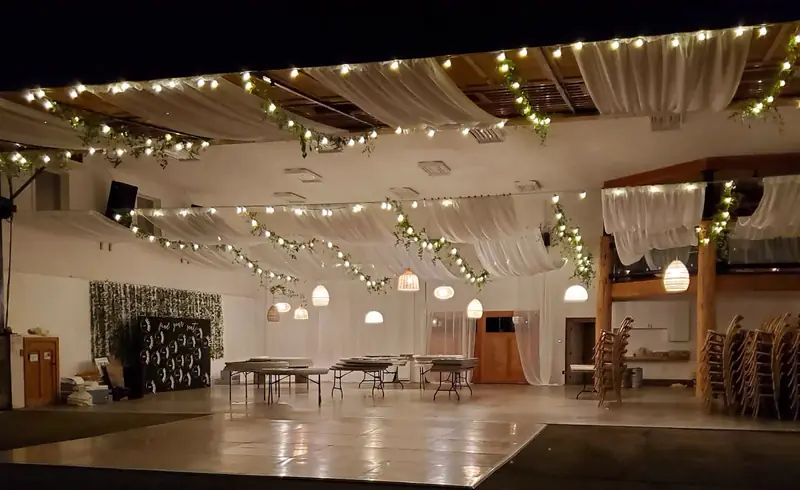
A wedding reception needs to accommodate much more than dinner seating. The dance floor, bar, entertainment, entrances, service routes, and gathering areas all compete for space. Tables and chairs should fit into that larger plan rather than filling the room before the other functions have been considered.
Identify the Major Reception Areas
Before determining table quantities, establish where the major activities will happen. Most reception layouts need to account for dining, dancing, bar service, entertainment, and guest circulation. Some may also include a sweetheart table, head table, lounge area, cake display, or catering stations.
These elements should be positioned conceptually before the furniture plan is finalized. Otherwise, couples may discover that the number of tables that technically fits leaves too little room for the parts of the reception guests actually move between.
The layout does not need to be perfect at the beginning. It simply needs to establish which areas require space and which areas can remain flexible.
Leave Enough Room for Guests to Move
Open space is part of a functional reception. Guests need comfortable routes from their seats to the bar, dance floor, restrooms, exits, and other gathering areas. Chairs also extend beyond the edge of a table once guests are seated, meaning a layout that looks spacious on paper can feel much tighter once the reception is occupied.
Rather than trying to maximize the number of tables in every available area, couples should look at the room as guests will experience it.
A slightly more open arrangement often feels more comfortable and polished than one that uses every possible foot of space.
Consider How Servers Will Use the Room
Catering service also affects the furniture plan. Servers may need to move between tables carrying plated meals, clear dishes, refresh drinks, or deliver shared food. If the layout leaves narrow routes between occupied chairs, even a visually attractive reception can become difficult to operate.
This is one reason table placement should be reviewed with the broader planning team rather than treated as a standalone furniture decision.
Let Guest Count Establish the Starting Point
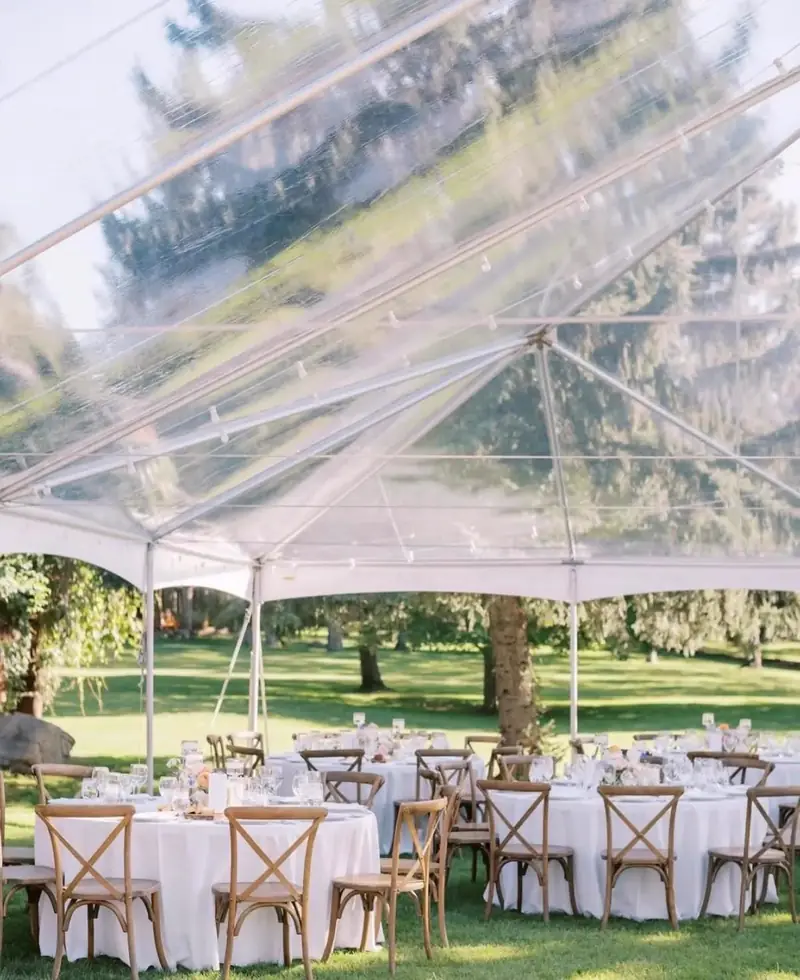
Guest count determines the scale of the furniture plan, but it does not provide every answer.
Two weddings with 120 guests could use completely different arrangements depending on table style, dinner service, venue dimensions, entertainment, and how much open space the couple wants to preserve.
Begin With an Estimated Guest Count
Couples do not need final RSVPs before discussing tables and chairs.
A realistic estimate is usually enough to develop the first layout and determine approximately how much furniture will be needed. That early estimate can also help identify whether the preferred table configuration is practical within the venue.
At this stage, the focus should be on understanding the scale of the reception rather than finalizing exact quantities.
Refine the Count as the Wedding Gets Closer
Once RSVPs arrive and the seating plan becomes clearer, furniture quantities can be adjusted.
Some tables may disappear from the layout, while others may need to be added or rearranged. Family groupings, children, accessibility needs, and changes to the wedding party can all affect the final plan.
The important point is to allow the layout to evolve with the guest list rather than forcing an early furniture count to remain unchanged.
Consider More Than Dining Seats
The reception is not the only place guests may need seating.
Couples should also account for ceremony chairs, cocktail-hour seating where appropriate, sweetheart or head-table arrangements, and any additional seating intended for guests who may not want to remain on the dance floor later in the evening.
Keeping these needs separate from the dinner count makes the final order easier to understand.
Round Tables or Long Tables? Start With How You Want Dinner to Feel
Table shape affects more than the appearance of the reception. It influences conversation, sightlines, circulation, and the rhythm of the room.
Neither round nor long tables are inherently better. The stronger choice is the one that supports the venue and the kind of dinner experience the couple wants to create.
Round Tables Create Smaller Conversation Groups
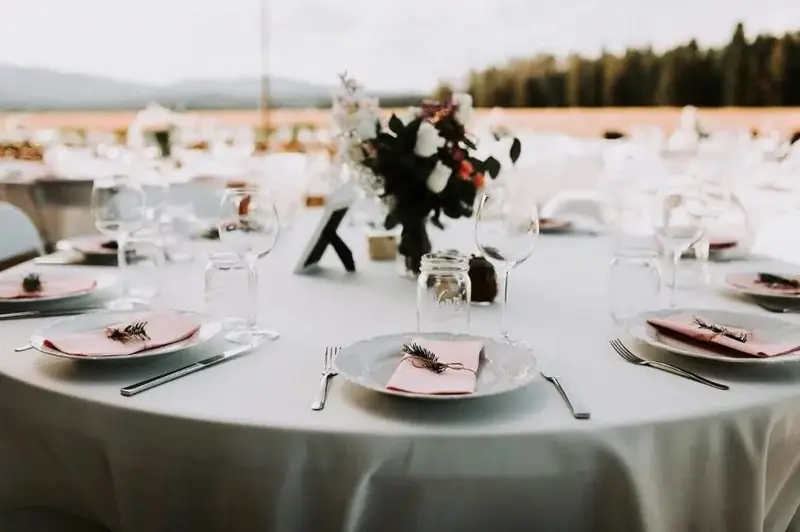
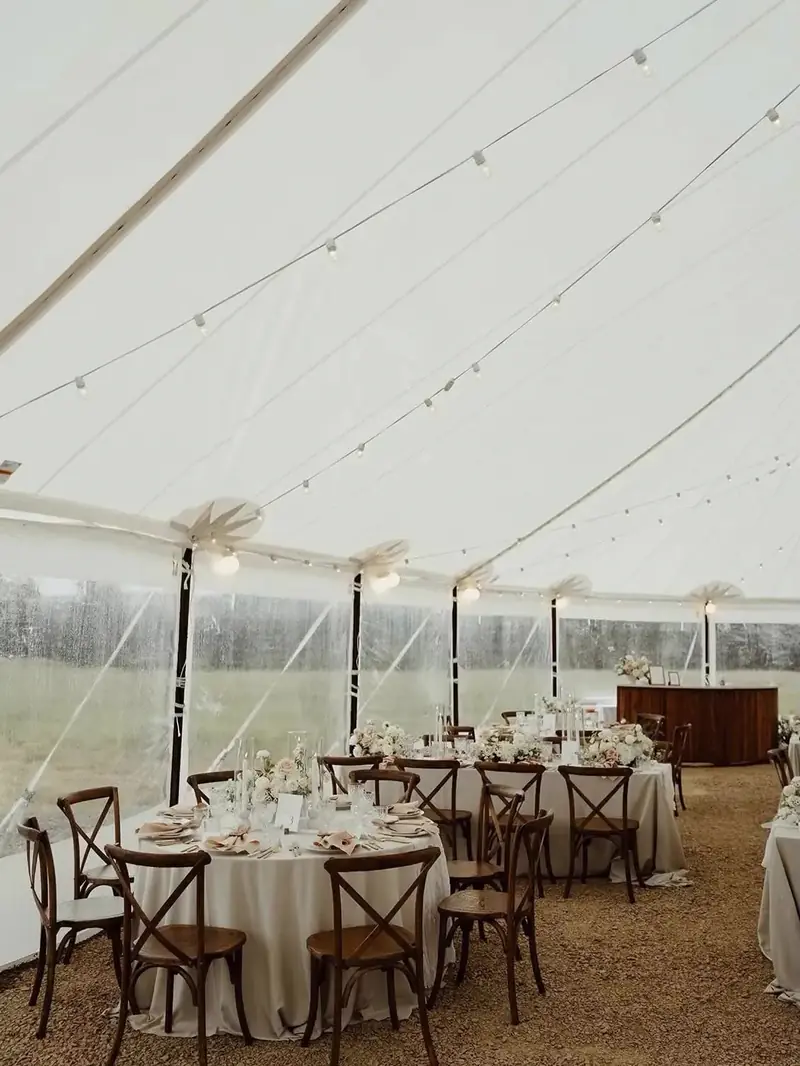
Round tables naturally organize guests into individual groups.
They are familiar, flexible, and easy to distribute throughout many reception spaces. Because guests face inward toward one another, rounds can create a comfortable conversational setting during dinner.
They can also help break a large room into smaller social groups without requiring additional furniture zones.
The visual effect tends to be softer and more distributed across the reception rather than emphasizing long lines through the space.
Long Tables Create a Different Social Experience
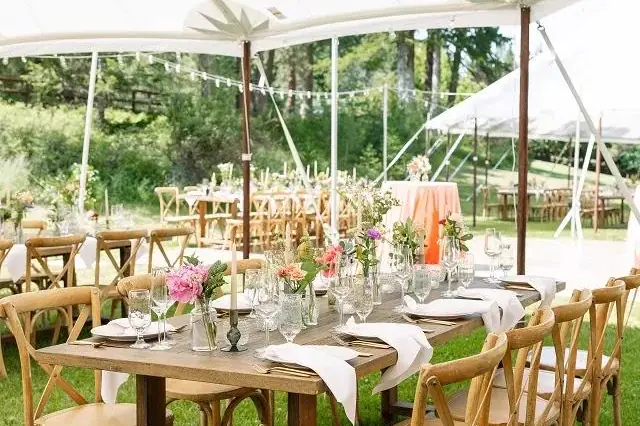
Long tables create stronger horizontal lines and often make a greater architectural statement within the room.
They can feel communal and visually cohesive, particularly when several tables run parallel to one another or align with the shape of the venue. They also create a different type of dinner interaction, with guests seated along a shared length rather than around smaller individual groups.
Because they use space differently from rounds, long tables should be evaluated within the actual floor plan rather than chosen only for their appearance.
Mixed Table Layouts Can Solve Practical Problems
A wedding does not need to choose one table shape for the entire reception.
A mixed layout can be particularly useful when the room is irregular, when family groupings vary, or when the couple wants a distinctive head-table arrangement without repeating the same configuration everywhere else.
Rounds might work well through the center of the room while long tables fit more naturally along an edge. A long head table can create a focal point within a reception otherwise furnished with rounds.
When mixed layouts work well, they feel intentional rather than random. The shapes respond to the room and guest needs instead of being used simply for variety.
When Farm Tables Make Sense
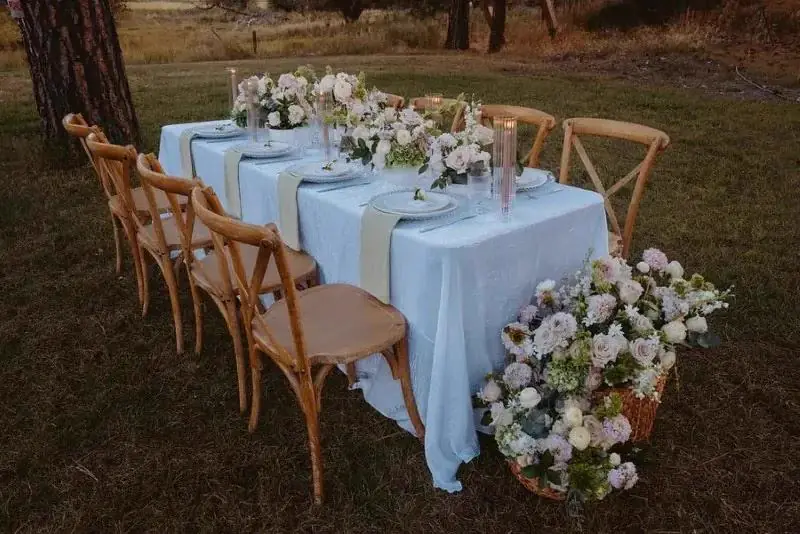
Farm tables can add strong visual character to a reception, but they should not automatically be treated as the default furniture choice for a Montana wedding.
Their appeal comes from the visible material, proportions, and way they interact with the surrounding design.
Use the Table Surface as Part of the Design
A visible wood surface already contributes color and texture.
For couples who want that material to remain part of the room, a farm table may require less textile coverage than a more neutral banquet table. Tabletop pieces, florals, and place settings can then be layered directly against the wood.
This can make the table itself part of the design rather than simply a surface hidden beneath linen.
Consider the Space They Occupy
Long farm tables create a particular footprint.
They influence aisle widths, table spacing, service access, and how guests are grouped. A layout that uses several long tables may require different circulation planning than a room filled with rounds.
Before choosing them, couples should make sure the venue can support the configuration comfortably.
Decide Whether the Style Fits the Venue
Farm tables can work in many environments, not only rustic weddings.
Their final character depends heavily on what surrounds them. Refined chairs, understated florals, polished tabletop pieces, or a more formal setting can shift the overall effect significantly.
Instead of asking whether a farm table is “formal” or “rustic,” it is more useful to ask whether its material, scale, and shape support the overall wedding design.
Choose Chairs With the Entire Room in Mind
Chairs deserve almost as much attention as tables because they are repeated throughout the reception.
A single chair may appear understated when viewed alone, but dozens or hundreds of the same chair can become one of the most dominant visual elements in the room.
Consider Silhouette and Finish
Chair shape influences the level of formality and the visual density of the reception.
Some silhouettes feel lighter and more open, while others have a stronger or more traditional presence. Material and finish also matter because they interact with the tables, venue, linens, and surrounding architecture.
Think About How the Chair Looks Beside the Table
Tables and chairs do not need identical finishes.
In fact, a slight contrast can give both elements more definition. A warm wood chair may work beside a linen-covered table, while a more neutral seating option may allow a visible table surface to take the lead.
What matters is that the pairing looks deliberate.
The proportions should also make sense. A visually heavy chair beside a delicate table, or a very slender chair beside a substantial table, can sometimes create imbalance even if the colors technically coordinate.
Remember That Comfort Still Matters
Wedding chairs are not only decorative objects.
Guests may remain seated through dinner, speeches, and other portions of the reception. Comfort should therefore be considered alongside style, particularly for weddings with longer dinner programs.
The best seating choice supports the visual direction without asking guests to sacrifice comfort for the sake of appearance.
Should Ceremony and Reception Chairs Be the Same?
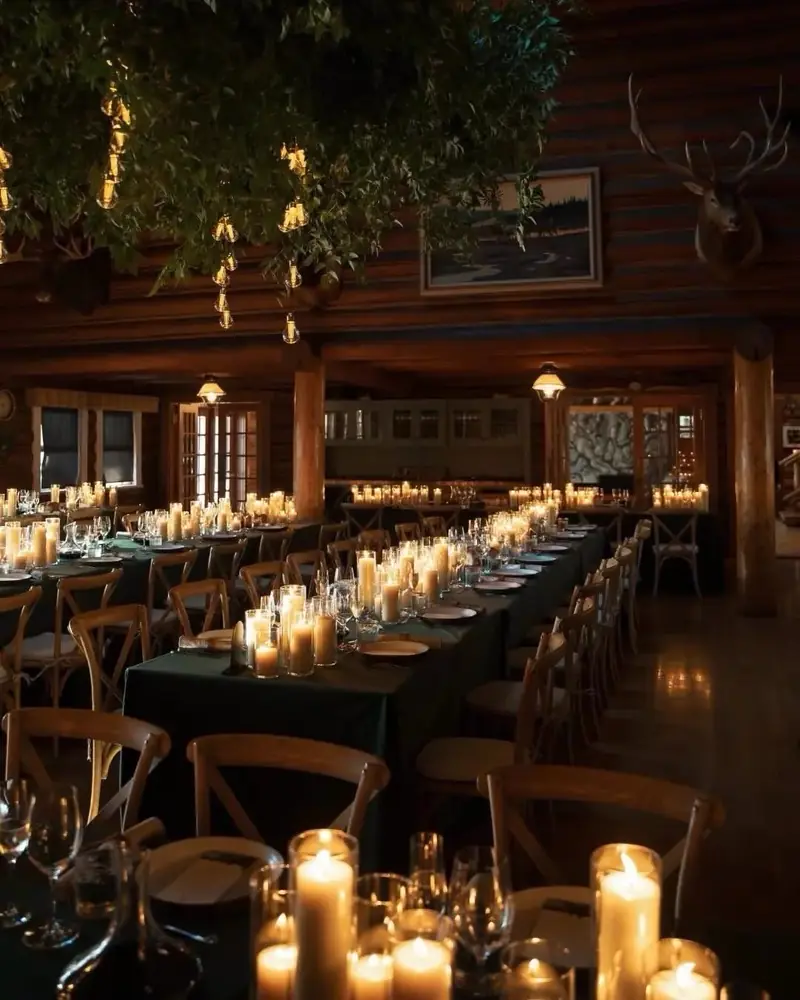
Using the same chairs for the ceremony and reception can create consistency, but it is not always the most practical plan.
The answer depends on the distance between the two spaces, the wedding schedule, and when the reception needs to be fully set.
Reusing Chairs Can Simplify the Furniture List
When the ceremony and reception are close together and the schedule allows sufficient transition time, using the same chair may reduce the total number of pieces required.
It can also create visual continuity between the two parts of the wedding.
However, the decision should not be based on quantity alone. Someone still needs to move those chairs, and the timing needs to work within the larger event schedule.
Moving Chairs Requires Time and Coordination
A fast transition between the ceremony and cocktail hour can make furniture movement difficult.
Guests may still be leaving the ceremony area while staff are beginning the next stage of setup. At the same time, other vendors may be working elsewhere on the property.
If moving chairs creates unnecessary disruption, separate seating may provide a smoother experience.
Separate Seating May Make More Sense
Separate ceremony and reception chairs can be particularly useful when the two spaces are far apart or when the reception needs to be completely finished before guests arrive.
They also allow the two environments to have slightly different visual characters.
The ceremony might use simple seating that keeps attention on the setting, while the reception uses a chair selected more specifically for the dining design.
Match the Furniture to the Dinner Format
The way dinner will be served should influence the table plan.
A table is not simply a place for guests to sit. It also needs to hold the place setting, florals, glassware, stationery, and any food or serving pieces associated with the meal.
Consider How Food Will Be Served
A plated dinner places different demands on the table than family-style service.
Buffets or stations may reduce the amount of food placed directly on the dining table, while shared dishes require additional room between place settings and centerpieces.
None of these formats automatically dictates one table shape. They simply change how much usable surface is needed.
Account for What Needs to Fit on the Table
Before finalizing furniture, couples should have a general idea of the dinner setup.
A table may need to accommodate:
- Plates and flatware
- Multiple glasses
- Napkins
- Menus or place cards
- Floral arrangements
- Candles
- Shared serving pieces
If all of those details are introduced after the table has already been selected, the finished place setting can become cramped.
Coordinate With the Caterer and Planner
The catering and planning teams can provide useful context before furniture quantities are finalized.
A family-style meal may require different tabletop spacing from plated service. A larger centerpiece concept may affect how much surface remains available. A particular service approach may also require wider circulation around the tables.
Those decisions do not need to dictate the design, but they should inform it.
Think About Tabletop Before Finalizing the Table Size
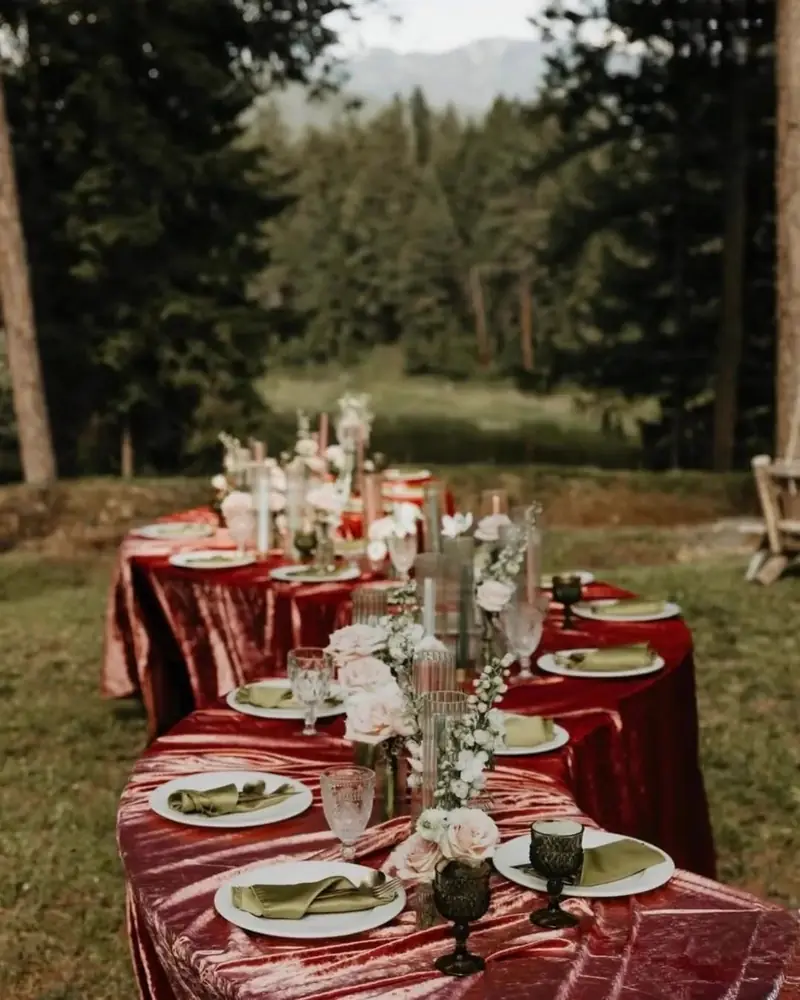
Tabletop design deserves consideration during furniture planning even though the detailed styling decisions can happen later. The objective at this stage is simply to understand how the table will be used.
Large Centerpieces Need Different Space Than Minimal Florals
A substantial floral arrangement occupies more physical and visual space than a low, restrained centerpiece.
If florals will be a major part of the design, the table needs enough room for them without compromising dinner service.
Family-Style Service Changes the Equation
Shared platters and serving dishes require usable surface throughout dinner. Couples considering this format should make sure centerpieces, place settings, and table dimensions leave practical space for the meal itself.
Let the Table Support the Design
A well-chosen table provides enough room for the intended dinner experience without making the reception feel unnecessarily large. The table should support both the visual concept and the practical requirements.
Use Furniture to Support the Venue, Not Compete With It
Flathead Valley venues often have their own strong character, whether that comes from architecture, natural materials, or surrounding scenery. Furniture should respond to that environment rather than attempting to overwhelm it.
Consider Existing Architecture and Materials
Wood tones, flooring, stone, permanent fixtures, and existing furniture all contribute to the room.
Those elements do not need to match the rented furniture, but they should be considered when selecting finishes and silhouettes. A chair that works beautifully in one setting may feel visually heavy or disconnected in another.
Scenic Venues May Need Less Visual Furniture Impact
When the property already provides an important view, the furniture can afford to be quieter.
Simple tables and chairs may frame the setting more effectively than highly decorative pieces that compete for attention.
This is particularly relevant for outdoor weddings where the landscape is intended to remain visible throughout the reception.
Formality Comes From the Whole Room
No single table or chair makes a wedding formal or relaxed. Formality develops through the combination of furniture, linens, lighting, florals, tabletop pieces, and the venue itself.
A farm table can feel polished in one context and casual in another. A crossback chair can support a romantic outdoor reception or a more restrained design depending on how the rest of the room is styled.
Looking at the complete environment prevents furniture labels from becoming too limiting.
A Simple Tables and Chairs Planning Checklist
Before confirming the furniture order, review the wedding as a complete event rather than a collection of individual pieces.
Before Choosing Furniture
- Confirm the venue and reception footprint
- Estimate the guest count
- Identify ceremony and reception areas
- Determine where the bar and dance floor will be
- Account for entertainment and service areas
When Choosing Tables
- Consider the preferred dinner layout
- Evaluate round, long, or mixed configurations
- Account for the dinner service style
- Consider the planned tabletop
- Preserve comfortable circulation
When Choosing Chairs
- Consider comfort
- Review finish and silhouette
- Evaluate how the chairs pair with the tables
- Decide whether ceremony and reception seating will be shared
Before Finalizing Quantities
- Review RSVPs
- Confirm the seating plan
- Check accessibility or special seating requirements
- Review table and chair quantities together
- Make sure the final floor plan still leaves adequate open space
Frequently Asked Questions
How many tables do I need for a wedding?
The number depends on guest count, table shape, seating configuration, venue dimensions, and dinner format. An estimated guest count can be used for early planning, but final quantities should be reviewed once RSVPs and the reception layout are clearer.
Are round or rectangular tables better for a wedding reception?
Neither is universally better. Round tables create smaller conversation groups and distribute guests throughout a space differently, while long tables can create stronger visual lines and a more communal arrangement. The venue and floor plan should help determine which option works best.
Can a wedding use both round and long tables?
Yes. A mixed layout can be particularly useful in irregular spaces or when different guest groupings require different arrangements. The combination should feel intentional and respond to the dimensions of the room.
Should ceremony and reception chairs match?
They can, but they do not need to. Matching chairs can create visual continuity, while separate seating may be more practical when the ceremony and reception are far apart or the reception needs to be fully set before the ceremony ends.
When should couples finalize table and chair quantities?
Initial planning can begin once the venue and approximate guest count are known. Final quantities are better reviewed after RSVPs, and the seating plan is more complete, while still allowing enough time to work within the rental company's availability and policies.
The Best Furniture Plan Starts With How the Wedding Will Be Used
Choosing tables and chairs for a Flathead Valley wedding is not simply a matter of deciding which pieces look best in photographs.
The furniture needs to support the guest count, dinner format, venue, circulation, ceremony plan, and overall reception design. Round tables may work beautifully for one wedding, while long tables may better support another. Farm tables may become part of the visual design, while linen-covered tables may provide a quieter foundation. Ceremony chairs may be reused, or separate seating may make the event schedule easier. The right answer depends on the wedding itself.